I am shipping orders on Thursday this week. News and More Info

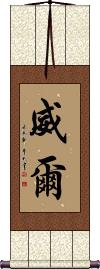
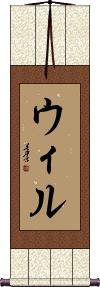
The Name Wil in Japanese/Chinese on a Custom-Made Wall Scroll.

Click the "Customize" button next to your name below to start your personalized wil calligraphy artwork...

Switched to secondary search mode due to lack of results using primary.
These secondary results may not be very accurate. Try a different but similar meaning word or phrase for better results. Or...

Look up Wil in my Japanese Kanji & Chinese Character Dictionary(My dictionary is a different system then the calligraphy search you just tried)

If you want a special phrase, word, title, name, or proverb, feel free to contact me, and I will translate your custom calligraphy idea for you.


  1. Born To Be Wild

  2. Thorns / Bramble / Briar Patch / Wild Rose

  3. You May Learn from Victory, You Will Learn from Failure

  4. Crazy / Mad / Wild

  5. Dawn / Early Morning / Twilight

  6. A Truly Determined Person Will Find a Solution

  7. Do not fear the task: Cooperation will lead to success

  8. Free Will

  9. Glenwill

10. Good Intentions / Good Will / Good Faith

11. You May Learn from Victory, You Will Learn from Failure

12. Love Will Find A Way

13. Where There is a Will, There is a Way

14. Perseverance / Will-Power

15. Self-Discipline / Will-Power

16. Strong-Willed / Strong of Heart

17. Strong Hearted / Strong Willed

18. Strong Willed

19. Sunset / Twilight

20. Terwilliger

21. To a Willing Heart, All Things Are Possible

22. Where there’s a will there’s a way

23. Where There is a Will, There is a Way

24. Wil

25. Wilane

26. Wilbanks

27. Wilber

28. Wilbert

29. Wilberts

30. Wilborn

31. Wilbur

32. Wilburn

33. Wilcher

34. Wilcox

35. Wild Goose

36. Wild Rose

37. Wilde

38. Wilder

39. Wilderg

40. Wildman

41. Wiles

42. Wiley

43. Wilfong

44. Wilford

45. Wilfred

46. Wilfredo

47. Wilfri

48. Wilfrid

49. Wilfried

50. Wilhelm

51. Wilhelmina

52. Wilhite

53. Wilk

54. Wilke

55. Wilken

56. Wilkens

57. Wilkerson

58. Wilkes

59. Wilkey

60. Wilkie


Born To Be Wild

 tiān shēng kuáng yě
Born To Be Wild Scroll

天生狂野 is “Born To Be Wild” (like the Steppenwolf song) in Chinese (Mandarin).

If you get to the deep meaning, the first two characters can mean “born” but refer as much to the nature, disposition, calling, or innate qualities of something or someone.

The last two mean coarse and/or wild.

So it kind of means that it is your nature to be wild.

Born To Be Wild

 wairudode ikou
Born To Be Wild Scroll

This is the Japanese version of “Born To Be Wild” (title of the Steppenwolf song).

The more literal meaning in Japanese for this phrase is “Let's go wild.”


Note: Because this title is entirely Japanese Hiragana and Katakana, it should be written by a Japanese calligrapher.

Thorns / Bramble / Briar Patch / Wild Rose

 jīng jí
 keikyoku
Thorns / Bramble / Briar Patch / Wild Rose Scroll

荊棘 is a Chinese and Japanese Kanji word that means: thistles and thorns; brambles; thorny undergrowth; wild rose; bramble; briar patch; briars; thicket; the bush.

Sometimes this term is used figuratively to refer to an obstacle or source of difficulty that makes your path difficult.

You May Learn from Victory, You Will Learn from Failure

 bǎi shèng nán lǜ dí sān zhé nǎi liáng yī
You May Learn from Victory, You Will Learn from Failure Scroll

百胜难虑敌三折乃良医 is a Chinese proverb that literally translates as: [Even a general who has won a] hundred victories [may be] hard put to see through the enemy's [strategy], [but one who has] broken [his] arm three [times] [will] be a good doctor.

Figuratively, this means: One cannot always depend on past successes to guarantee future success but one can always learn from lessons drawn from failure.


See Also:  Failure - Mother of Success | Experience - Mother of Success | Fall Down 7 Times Get Up 8 | Hard Knocks

Crazy / Mad / Wild

 kuáng
 kyou
 
Crazy / Mad / Wild Scroll

狂 is a single character that means “crazy” in Chinese, Japanese Kanji, and old Korean Hanja.

狂 means crazy, unrestrained, lunatic, insane, confused, deranged, wild, or mad.

This can also refer to an extreme enthusiast (like a football fan). But then, it can also refer to a person possessing a mental abnormality.

In some contexts, this can mean conceited (it probably won't be read that way on a wall scroll).

A warning: 狂 is an odd selection for a wall scroll. You should only order this if you plan to bewilder or confuse those who see it. It kind of says something about you, something that most native Asian people will not view in a good light.

Dawn / Early Morning / Twilight

 lí míng
 rei mei
Dawn / Early Morning / Twilight Scroll

黎明 is the word that means dawn, early morning, or daybreak in Chinese, Japanese Kanji, and old Korean Hanja.

A Truly Determined Person Will Find a Solution

 yǒu zhì zhě shì jìng chéng
A Truly Determined Person Will Find a Solution Scroll

有志者事竟成 is a Chinese proverb that means “A really determined person will find a solution.”

It figuratively means “Where there's a will, there's a way.”

Do not fear the task: Cooperation will lead to success

Do not fear strong winds waves; just be sure to row in unison

 bù pà fēng làng dà jiù pà jiǎng bù qí
Do not fear the task: Cooperation will lead to success Scroll

不怕风浪大就怕桨不齐 is a Chinese proverb that literally translates as: Do not fear strong winds [and] high waves; what [one should] worry about whether or not you're rowing in unison.

Figuratively, this means: However difficult the task, the key to success lies in making collective efforts.

I like to translate this as “Don't sweat the details, just get together and get it done.”

 zì yóu yì zhì
 jiyuu ishi
Free Will Scroll

自由意志 is a concept that has existed for thousands of years that humans can understand right and wrong, then make a decision one way or the other (thus affecting their fate).

Sources such as Confucius, Buddhist scriptures, the Qur'an, and the Bible all address this idea.

As for the characters shown here, the first two mean free, freedom, or liberty. The last two mean “will.”

Can be romanized from Japanese as jiyū-ishi, jiyuu-ishi, and sometimes jiyuu-ishii.
It's 자유의지 or jayuu-yiji in Korean and zìyóu yìzhì in Chinese.


See Also:  Freedom | Strong Willed | Fate

 gé lún wēi ěr
Glenwill Scroll

格倫威爾 is the name Glenwill in Chinese (Mandarin).

 gurenwiru
Glenwill Scroll

グレンウィル is the name Glenwill in Japanese Katakana.


Note: Because this title is entirely Japanese Katakana, it should be written by a Japanese calligrapher.

Good Intentions / Good Will / Good Faith

 shàn yì
 zen i
Good Intentions / Good Will / Good Faith Scroll

善意 is a word that means good intentions, goodwill, or to things done in good faith in Chinese, Japanese, and old Korean Hanja.

It's the reason you do good deeds or the desire you have inside yourself to do the right thing.

This can also be translated as benevolence, kindness, virtuous mind, positive mindset, or favorable sense.

善意 is also used in the legal context for things done in good faith (regardless of outcome).

In Japanese, this can be the personal name Yoshi or Yoshii.

You May Learn from Victory, You Will Learn from Failure

 katte erumono mo areba makete erumono mo aru
You May Learn from Victory, You Will Learn from Failure Scroll

You may learn when everything goes right but the lessons learned when everything goes wrong are more vivid and lead to long-lasting wisdom.

Another way to look at this: One cannot always depend on past successes to guarantee future success but one can always learn from lessons drawn from failure.


Note: Because this selection contains some special Japanese Hiragana characters, it should be written by a Japanese calligrapher.

Love Will Find A Way

 zhōng chéng juàn shǔ
Love Will Find A Way Scroll

終成眷屬 is a Chinese proverb that translates roughly as “Love will find a way to come together.”

Love Will Find A Way

 yǒu qíng rén zhōng chéng juàn shǔ
Love Will Find A Way Scroll

有情人終成眷屬 is the long version of the Chinese proverb that translates as “Where there are lovers, love will find a way (to come together).”

Where There is a Will, There is a Way

A determined effort can move a mountain

 yū gōng yí shān
Where There is a Will, There is a Way Scroll

愚公移山 is the Chinese proverb (also somewhat known in Japan and Korea) for “the silly old man moves a mountain.”

Figuratively, this means “where there's a will, there's a way.”

Based on a fable of Lord Yu (愚公). He moved the soil of the mountain in front of his house. After years of effort, he finally moved the entire mountain (some versions of the story have God seeing how determined the man was, and sending two angels to whisk the mountains away).

The moral of the story: Anything can be accomplished if one works at it ceaselessly.


The Japanese version of this is 愚公山を移す (gu kou yama wo utsu su). But better to get the Chinese version, since this is originally a Chinese proverb.


See Also:  Nothing is Impossible

Perseverance / Will-Power

 yì lì
Perseverance / Will-Power Scroll

毅力 is a way to express “perseverance” with the idea of “willpower” in Chinese and old Korean Hanja. It can also mean “strong-willed.”

The first character means “strong” and “persistent,” while the second means “strength” and “power.”

Self-Discipline / Will-Power

 zì lǜ
 jiritsu
Self-Discipline / Will-Power Scroll

自律 means self-discipline and self-control.

It is doing what you really want to do rather than being tossed around by your feelings like a leaf in the wind. You act instead of reacting. You get things done in an orderly and efficient way. With self-discipline, you take charge of yourself.


Not sure if this one works for a Japanese audience.


See Also:  Discipline | Self-Control

Strong-Willed / Strong of Heart

 ki no tsuyo i
Strong-Willed / Strong of Heart  Scroll

気の強い means strong-willed or strong of heart in Japanese.

Here's the character breakdown of this Japanese title:
気 (ki) spirit; mind; heart; nature; motivation; intention; feelings; essence.
の (no) possessive particle.
強い (tsuyoi) strong; powerful; mighty; potent; resistant; resilient; durable.


Note: Because this selection contains some special Japanese Hiragana characters, it should be written by a Japanese calligrapher.

Strong Hearted / Strong Willed

 yì zhì jiān qiáng
Strong Hearted / Strong Willed Scroll

意志堅強 can mean either “strong-hearted,” “strong-willed” or “determination.”

The first two characters can be translated as “will,” “willpower,” “determination,” “volition,” “intention,” or “intent.” But, it should be noted that this first part possesses the element of “heart” in the lower portion of both characters (they also partially carry the meaning “with the whole heart”).

The last two characters mean “strong” or “staunch.”

Chinese word order and grammar are a bit different than English, so in this case, they are in reverse order of English but have the correct meaning in a natural form.


See Also:  Strong Willed | Discipline | Will-Power

Strong Willed

 yìng qì
Strong Willed Scroll

硬氣 means firm, unyielding, or strong-willed in Chinese.

If you take pride in being strong-willed or a bit stubborn, this could be for you.

Sunset / Twilight

 rì mù
 higure
Sunset / Twilight Scroll

日暮 is a Chinese and Japanese Kanji word that means sunset, twilight, or dusk.

It can also refer to the arrival of the evening or be the Japanese surname, Higure.

 tè wēi lì gé
Terwilliger Scroll

特威利格 is the name Terwilliger in Chinese (Mandarin).

 taawirigaa
Terwilliger Scroll

ターウィリガー is the name Terwilliger in Japanese Katakana.


Note: Because this title is entirely Japanese Katakana, it should be written by a Japanese calligrapher.

To a Willing Heart, All Things Are Possible

Where there is a will, there is a way

 yǒu zhì zhě shì jìng chéng
To a Willing Heart, All Things Are Possible Scroll

有志者事竟成 is an old Chinese proverb that has been translated many different ways into English. As you read the translations below, keep in mind that in Chinese, heart=mind.

Nothing is impossible to a willing heart.
Nothing is impossible to a willing mind.
Nothing is difficult to a willing heart.
Where there is a will, there is a way.
Nothing in the world is impossible if you set your mind to doing it.
A willful man will have his way.
If you wish it, you will do it.
A determined heart can accomplish anything.
All things are possible with a strong mind.


Where there’s a will there’s a way

persevere and you will succeed

 yǒu zhì jìng chéng
Where there’s a will there’s a way Scroll

有志竟成 is a Chinese proverb that means “persevere and you will succeed.”

It's very much like the English idiom, “where there's a will, there's a way.”

Where There is a Will, There is a Way

 seishin ittou nanigoto ka nara zaran
Where There is a Will, There is a Way Scroll

精神一到何事か成らざらん is a Japanese expression that means “Where there is a will, there is a way. There are other Japanese phrases with similar meanings but this one is the most commonly used (according to the number of results on Japanese Google).

This can also be romanized as “seshinittonanigotokanarazaran.”


Note: Because this selection contains some special Japanese Hiragana characters, it should be written by a Japanese calligrapher.

 wēi ěr
Wil Scroll

威爾 is the name Wil in Chinese (Mandarin).

 wēi ěr
Wil Scroll

威爾 is the name Wil in Chinese (Mandarin).

 wiru
Wil Scroll

ウィル is the name Wil in Japanese.


Note: Because this title is entirely Japanese Katakana, it should be written by a Japanese calligrapher.

 wéi lán
Wilane Scroll

This is a common Mandarin Chinese transliteration for the female Arabic name Wilane.

 wireen
Wilane Scroll

ウィレーン is the name Wilane in Japanese (Katakana).


Note: Because this title is entirely Japanese Katakana, it should be written by a Japanese calligrapher.

 wēi ěr bān kè sī
Wilbanks Scroll

威爾班克斯 is the name Wilbanks in Chinese (Mandarin).

 wirubankusu
Wilbanks Scroll

ウィルバンクス is the name Wilbanks in Japanese Katakana.


Note: Because this title is entirely Japanese Katakana, it should be written by a Japanese calligrapher.

 wēi ěr bó
Wilber Scroll

威爾伯 is the name Wilber in Chinese (Mandarin).

 wirubaa
Wilber Scroll

ウィルバー is the name Wilber in Japanese (Katakana).


Note: Because this title is entirely Japanese Katakana, it should be written by a Japanese calligrapher.

 wēi ěr bó tè
Wilbert Scroll

威爾伯特 is the name Wilbert in Chinese (Mandarin).

 wirubaato
Wilbert Scroll

ウィルバート is the name Wilbert in Japanese Katakana.


Note: Because this title is entirely Japanese Katakana, it should be written by a Japanese calligrapher.

 wēi ěr bó cí
Wilberts Scroll

威爾伯茨 is the name Wilberts in Chinese (Mandarin).

 wirubaatsu
Wilberts Scroll

ウィルバーツ is the name Wilberts in Japanese Katakana.


Note: Because this title is entirely Japanese Katakana, it should be written by a Japanese calligrapher.

 wēi ěr bó ēn
Wilborn Scroll

威爾伯恩 is the name Wilborn in Chinese (Mandarin).

 wiruboon
Wilborn Scroll

ウィルボーン is the name Wilborn in Japanese Katakana.


Note: Because this title is entirely Japanese Katakana, it should be written by a Japanese calligrapher.

 wēi ěr bó
Wilbur Scroll

威爾伯 is the name Wilbur in Chinese (Mandarin).

 wirubaa
Wilbur Scroll

ウィルバー is the name Wilbur in Japanese Katakana.


Note: Because this title is entirely Japanese Katakana, it should be written by a Japanese calligrapher.

 wēi ěr bó ēn
Wilburn Scroll

威爾伯恩 is the name Wilburn in Chinese (Mandarin).

 wirubaan
Wilburn Scroll

ウィルバーン is the name Wilburn in Japanese Katakana.


Note: Because this title is entirely Japanese Katakana, it should be written by a Japanese calligrapher.

 wēi ěr chè
Wilcher Scroll

威爾徹 is the name Wilcher in Chinese (Mandarin).

 wiruchaa
Wilcher Scroll

ウィルチャー is the name Wilcher in Japanese Katakana.


Note: Because this title is entirely Japanese Katakana, it should be written by a Japanese calligrapher.

 wēi ěr kē kè sī
Wilcox Scroll

威爾科克斯 is the name Wilcox in Chinese (Mandarin).

 wirukokkusu
Wilcox Scroll

ウィルコックス is the name Wilcox in Japanese Katakana.


Note: Because this title is entirely Japanese Katakana, it should be written by a Japanese calligrapher.

 yàn
 karigane / kari
 
Wild Goose Scroll

雁 is the single character for wild goose in Chinese, Japanese, and Korean.

 yě méi guì
Wild Rose Scroll

野玫瑰 is the simplest way to write “wild rose” in Chinese.

The first word literally means wild. The second is the single-character form of rose or roses (plural or singular is not specified in Chinese characters). This can also be translated as “sweet briar.”

 wáng ěr dé
Wilde Scroll

王爾德 is the name Wilde in Chinese (Mandarin).

 wairudo
Wilde Scroll

ワイルド is the name Wilde in Japanese Katakana.


Note: Because this title is entirely Japanese Katakana, it should be written by a Japanese calligrapher.

 huái ěr dé
Wilder Scroll

懷爾德 is the name Wilder in Chinese (Mandarin).

 wairudaa
Wilder Scroll

ワイルダー is the name Wilder in Japanese Katakana.


Note: Because this title is entirely Japanese Katakana, it should be written by a Japanese calligrapher.

 wēi ěr dé gé
Wilderg Scroll

威爾德格 is the transliteration to Mandarin Chinese for the Latin / Spanish name Wilderg.

 wirudaagu
Wilderg Scroll

ウィルダーグ is the name Wilderg in Japanese Katakana.


Note: Because this title is entirely Japanese Katakana, it should be written by a Japanese calligrapher.

 huái ěr dé màn
Wildman Scroll

懷爾德曼 is the name Wildman in Chinese (Mandarin).

 wairudoman
Wildman Scroll

ワイルドマン is the name Wildman in Japanese Katakana.


Note: Because this title is entirely Japanese Katakana, it should be written by a Japanese calligrapher.

 wēi ěr sī
Wiles Scroll

威爾斯 is the name Wiles in Chinese (Mandarin).

 wiruzu
Wiles Scroll

ウィルズ is the name Wiles in Japanese Katakana.


Note: Because this title is entirely Japanese Katakana, it should be written by a Japanese calligrapher.

 wēi lì
Wiley Scroll

威利 is the name Wiley in Chinese (Mandarin).

 wairii
Wiley Scroll

ワイリー is the name Wiley in Japanese Katakana.


Note: Because this title is entirely Japanese Katakana, it should be written by a Japanese calligrapher.

 wēi ěr fāng
Wilfong Scroll

威爾方 is the name Wilfong in Chinese (Mandarin).

 wirufon
Wilfong Scroll

ウィルフォン is the name Wilfong in Japanese Katakana.


Note: Because this title is entirely Japanese Katakana, it should be written by a Japanese calligrapher.

 wēi ěr fú dé
Wilford Scroll

威爾福德 is the name Wilford in Chinese (Mandarin).

 wirufoodo
Wilford Scroll

ウィルフォード is the name Wilford in Japanese (Katakana).


Note: Because this title is entirely Japanese Katakana, it should be written by a Japanese calligrapher.

 wēi ěr fú léi dé
Wilfred Scroll

威爾弗雷德 is the name Wilfred in Chinese (Mandarin).

 wirufureddo
Wilfred Scroll

ウィルフレッド is the name Wilfred in Japanese Katakana.


Note: Because this title is entirely Japanese Katakana, it should be written by a Japanese calligrapher.

 wēi ěr fú léi duō
Wilfredo Scroll

This is the most common transliteration to Mandarin Chinese for the name Wilfredo.

 wēi ěr fó ruì duō
Wilfredo Scroll

This Mandarin Chinese transliteration sounds more like the name Wilfredo than the most common version.

 wirufureddo
Wilfredo Scroll

ウィルフレッド is the name Wilfredo in Japanese.


Note: Because this title is entirely Japanese Katakana, it should be written by a Japanese calligrapher.

 wēi ěr fú lǐ
Wilfri Scroll

威爾弗里 is the name Wilfri in Chinese (Mandarin).

 wirufuri
Wilfri Scroll

ウィルフリ is the name Wilfri in Japanese (Katakana).


Note: Because this title is entirely Japanese Katakana, it should be written by a Japanese calligrapher.

 wēi ěr fú lǐ dé
Wilfrid Scroll

威爾弗里德 is the name Wilfrid in Chinese (Mandarin).

 wirufuriddo
Wilfrid Scroll

ウィルフリッド is the name Wilfrid in Japanese Katakana.


Note: Because this title is entirely Japanese Katakana, it should be written by a Japanese calligrapher.

 wēi ěr fú lǐ dé
Wilfried Scroll

威爾弗里德 is the name Wilfried in Chinese (Mandarin).

 virufuriito
Wilfried Scroll

ヴィルフリート is the name Wilfried in Japanese.


Note: Because this title is entirely Japanese Katakana, it should be written by a Japanese calligrapher.

 wéi lè hè lè mǔ
Wilhelm Scroll

韋樂赫樂姆 is the name Wilhelm in Chinese (Mandarin).

 wiruherumu
Wilhelm Scroll

ウィルヘルム is the name Wilhelm in Japanese Katakana.


Note: Because this title is entirely Japanese Katakana, it should be written by a Japanese calligrapher.

 wēi lián mǐn nà
Wilhelmina Scroll

威廉敏娜 is the name Wilhelmina in Chinese (Mandarin).

 wiruherumina
Wilhelmina Scroll

ウィルヘルミナ is the name Wilhelmina in Japanese Katakana.


Note: Because this title is entirely Japanese Katakana, it should be written by a Japanese calligrapher.

 wēi ěr hǎi tè
Wilhite Scroll

威爾海特 is the name Wilhite in Chinese (Mandarin).

 wiruhaito
Wilhite Scroll

ウィルハイト is the name Wilhite in Japanese Katakana.


Note: Because this title is entirely Japanese Katakana, it should be written by a Japanese calligrapher.

 wēi ěr kè
Wilk Scroll

威爾克 is the name Wilk in Chinese (Mandarin).

 wiruku
Wilk Scroll

ウィルク is the name Wilk in Japanese Katakana.


Note: Because this title is entirely Japanese Katakana, it should be written by a Japanese calligrapher.

 wēi ěr kè
Wilke Scroll

威爾克 is the name Wilke in Chinese (Mandarin).

 wiruku
Wilke Scroll

ウィルク is the name Wilke in Japanese Katakana.


Note: Because this title is entirely Japanese Katakana, it should be written by a Japanese calligrapher.

 wēi ěr kěn
Wilken Scroll

威爾肯 is the name Wilken in Chinese (Mandarin).

 wiruken
Wilken Scroll

ウィルケン is the name Wilken in Japanese Katakana.


Note: Because this title is entirely Japanese Katakana, it should be written by a Japanese calligrapher.

 wēi ěr jīn sī
Wilkens Scroll

威爾金斯 is the name Wilkens in Chinese (Mandarin).

 wirukensu
Wilkens Scroll

ウィルケンス is the name Wilkens in Japanese Katakana.


Note: Because this title is entirely Japanese Katakana, it should be written by a Japanese calligrapher.

 wēi ěr kè sēn
Wilkerson Scroll

威爾克森 is the name Wilkerson in Chinese (Mandarin).

 wirukaason
Wilkerson Scroll

ウィルカーソン is the name Wilkerson in Japanese Katakana.


Note: Because this title is entirely Japanese Katakana, it should be written by a Japanese calligrapher.

 wēi ěr kè sī
Wilkes Scroll

威爾克斯 is the name Wilkes in Chinese (Mandarin).

 wirukusu
Wilkes Scroll

ウィルクス is the name Wilkes in Japanese Katakana.


Note: Because this title is entirely Japanese Katakana, it should be written by a Japanese calligrapher.

 wēi ěr jī
Wilkey Scroll

威爾基 is the name Wilkey in Chinese (Mandarin).

 wirukii
Wilkey Scroll

ウィルキー is the name Wilkey in Japanese Katakana.


Note: Because this title is entirely Japanese Katakana, it should be written by a Japanese calligrapher.

 wēi ěr jī
Wilkie Scroll

威爾基 is the name Wilkie in Chinese (Mandarin).

 wirukii
Wilkie Scroll

ウィルキー is the name Wilkie in Japanese Katakana.


Note: Because this title is entirely Japanese Katakana, it should be written by a Japanese calligrapher.


Dictionary

Lookup Wil in my Japanese & Chinese Dictionary

All of our calligraphy wall scrolls are handmade.

When the calligrapher finishes creating your artwork, it is taken to my art mounting workshop in Beijing where a wall scroll is made by hand from a combination of silk, rice paper, and wood.
After we create your wall scroll, it takes at least two weeks for air mail delivery from Beijing to you.

Allow a few weeks for delivery. Rush service speeds it up by a week or two for $10!

When you select your calligraphy, you'll be taken to another page where you can choose various custom options.


A nice Chinese calligraphy wall scroll

The wall scroll that Sandy is holding in this picture is a "large size"
single-character wall scroll.
We also offer custom wall scrolls in small, medium, and an even-larger jumbo size.

A professional Chinese Calligrapher

Professional calligraphers are getting to be hard to find these days.
Instead of drawing characters by hand, the new generation in China merely type roman letters into their computer keyboards and pick the character that they want from a list that pops up.

There is some fear that true Chinese calligraphy may become a lost art in the coming years. Many art institutes in China are now promoting calligraphy programs in hopes of keeping this unique form of art alive.

Trying to learn Chinese calligrapher - a futile effort

Even with the teachings of a top-ranked calligrapher in China, my calligraphy will never be good enough to sell. I will leave that to the experts.

A high-ranked Chinese master calligrapher that I met in Zhongwei

The same calligrapher who gave me those lessons also attracted a crowd of thousands and a TV crew as he created characters over 6-feet high. He happens to be ranked as one of the top 100 calligraphers in all of China. He is also one of very few that would actually attempt such a feat.


Some people may refer to this entry as Wil Kanji, Wil Characters, Wil in Mandarin Chinese, Wil Characters, Wil in Chinese Writing, Wil in Japanese Writing, Wil in Asian Writing, Wil Ideograms, Chinese Wil symbols, Wil Hieroglyphics, Wil Glyphs, Wil in Chinese Letters, Wil Hanzi, Wil in Japanese Kanji, Wil Pictograms, Wil in the Chinese Written-Language, or Wil in the Japanese Written-Language.