I am shipping orders on Thursday this week. News and More Info
Click the "Customize" button next to your name below to start your personalized ray calligraphy artwork...
Switched to secondary search mode due to lack of results using primary.
These secondary results may not be very accurate. Try a different but similar meaning word or phrase for better results. Or...
Look up Ray in my Japanese Kanji & Chinese Character Dictionary(My dictionary is a different system then the calligraphy search you just tried)
If you want a special phrase, word, title, name, or proverb, feel free to contact me, and I will translate your custom calligraphy idea for you.
1. Acorayda
2. Brayan
3. Braydan
4. Brayden
5. Braydon
6. Dray
7. Draymian
8. Gray Color
9. Gray
10. Grayson
11. The Lord's Prayer / Luke 11:2-4
12. The Lord's Prayer / Mathew 6:9-13
13. Morayo
14. Murray
16. Prayer
17. Prayer / Praying
19. Praying Mantis
20. Prayukta
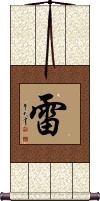
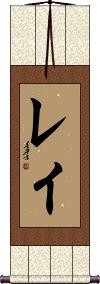
22. Ray
23. Raya
24. Rayaan
25. Rayan
26. Rayburn
27. Raychel
28. Raydan
29. Raye
30. Rayford
31. Raygan
32. Raygoza
33. Rayhan
34. Rayi
35. Raylan
36. Raylonie
37. Raymer
38. Raymon
39. Raymond
40. Raymonde
41. Raymundo
42. Rayna
43. Rayne
44. Rayner
45. Raynor
46. Rayo
47. Rayray
48. Raysa
49. Rayssa
50. Rayzen
51. Saray
52. Sarayi
53. Serenity Prayer
54. Shray
55. Soraya
灰色 is the Chinese, Japanese Kanji, and old Korean Hanja for the color gray.
This can also mean ash gray, grizzly, pessimistic, gloomy, dispirited, ambiguous (not black and white), and the alternate spelling grey.
Here is the Lord's Prayer in Chinese from Luke 11:2-4.
The Chinese text with punctuation is:
Part of 11:2 ...我们在天上的父,有古卷只作父阿愿人都尊你的名为圣。愿你的国降临。愿你的旨意行在地上,如同行在天上。有古卷无愿你的旨意云云。
11:3 我们日用的饮食,天天赐给我们。
11:4 赦免我们的罪,因为我们也赦免凡亏欠我们的人。不叫我们遇见试探。救我们脱离凶恶。有古卷无末句。
Note that punctuation is not included in traditional Chinese calligraphy artwork.
From KJV, this is:
Part of 11:2 ...Our Father which art in heaven, Hallowed be thy name. Thy kingdom come. Thy will be done, as in heaven, so in earth.
11:3 Give us day by day our daily bread.
11:4 And forgive us our sins; for we also forgive everyone that is indebted to us. And lead us not into temptation, but deliver us from evil.
Here is the Lord's Prayer in Chinese from Mathew 6:9-13.
The Chinese text with punctuation is:
Part of 6:9 ...我们在天上的父,愿人都尊你的名为圣。
6:10 愿你的国降临,愿你的旨意行在地上,如同行在天上。
6:11 我们日用的饮食,今日赐给我们。
6:12 免我们的债,如同我们免了人的债。
6:13 不叫我们遇见试探,救我们脱离凶恶,因为国度,权柄,荣耀,全是你的,直到永远,阿们。
Note that punctuation is not included in traditional Chinese calligraphy artwork.
From KJV, this is:
Part of 6:9 ...Our Father which art in heaven, Hallowed be thy name.
6:10 Thy kingdom come. Thy will be done in earth, as it is in heaven.
6:11 Give us this day our daily bread.
6:12 And forgive us our debts, as we forgive our debtors.
6:13 And lead us not into temptation, but deliver us from evil: For thine is the kingdom, and the power, and the glory, forever. Amen.
This can be translated literally as “Praying Mantis Fist.”
螳螂拳 is sometimes called Shandong Praying Mantis after its place of origin. It was created by Wang Lang and was named after the praying mantis, an insect, the aggressiveness of which inspired the style.
Shaolin records document that Wang Lang was one of the 18 masters gathered by the Shaolin Abbot Fu Ju, which dates him and Northern Praying Mantis style to the Song Dynasty (960-1279 A.D.).
The fact that the word “Northern” is used in the English title has more to do with where this style came from (Shandong is in northern China), but “north” is absent from this Chinese title.
Note: 螳螂拳 is also a title in Japanese - however, only a Japanese person who practices or is familiar with the “Praying Mantis Fist” style would recognize it.
祈禱 is a second way to write “prayer.”
It is a little more formal than “dao gao” but the general meaning is the same.
This Chinese/Japanese/Korean word can be translated as “to pray,” “to say one's prayers,” or simply “prayer.” Like the other common term for prayer, this term generally applies only to western religions that pray to the God of Abraham (Christians, Jews, and Muslims).
螳螂 is mantis or “praying mantis,” as it's often titled in English.
Technically speaking, this especially applies to the narrow-winged mantis (Tenodera angustipennis)
It is best to use this very common two-character Asian title for the mantis, as the second character alone can mean mantis or dragonfly (totally ambiguous).
This title is antiquated in Japanese, as they tend to write カマキリ (kama kiri) in Katakana to mean praying mantis.
Note: There is an alternate form of this title which uses the character shown to the right instead of the first character shown above. This is uncommon in both Japan and China (if you really want it anyway, please let us know).
In Japan, they used to write praying mantis in Kanji, but this Katakana title has taken over as the most common version.
This refers to the narrow-winged mantis, Tenodera angustipennis if you are a biologist.
Note: Because this title is entirely Japanese Katakana, it should be written by a Japanese calligrapher.
光芒 is the Chinese, Japanese Kanji, and old Korean Hanja for radiance meaning rays of light, brilliant rays, beams of light, etc.
光芒 is the radiance you feel when the sun hits your face in the morning, bringing you warmth while kickstarting your vitamin D production.
This is the serenity prayer, as used by many 12-step programs and support groups.
In Chinese, this says:
God grant me the serenity to accept the things I cannot change, the courage to change the things I can, and the wisdom to know the difference.
This is a Japanese version of the serenity prayer, as used by many 12-step programs and support groups.
In Japanese, this says:
God grant me the serenity to accept the things I cannot change, the courage to change the things I can, and the wisdom to know the difference.
Note: Because this selection contains some special Japanese Hiragana characters, it should be written by a Japanese calligrapher.
南派螳螂 can be translated literally as “Southern School Praying Mantis” or “Southern Style Praying Mantis.”
Despite its name, the Southern Praying Mantis style of Chinese martial arts is unrelated to the Northern Praying Mantis style. Southern Praying Mantis is instead related most closely to fellow Hakka styles such as Dragon and more distantly to the Fujian family of styles that includes Fujian White Crane, Five Ancestors, and Wing Chun.
This style of martial arts focuses more on fighting skills rather than aesthetics.
Of course, you already knew that if you were looking for this term.
Note: This title can be pronounced and does have meaning in Korean but only to Koreans familiar with Chinese martial arts.
All of our calligraphy wall scrolls are handmade.
When the calligrapher finishes creating your artwork, it is taken to my art mounting workshop in Beijing where a wall scroll is made by hand from a combination of silk, rice paper, and wood.
After we create your wall scroll, it takes at least two weeks for air mail delivery from Beijing to you.
Allow a few weeks for delivery. Rush service speeds it up by a week or two for $10!
When you select your calligraphy, you'll be taken to another page where you can choose various custom options.
The wall scroll that Sandy is holding in this picture is a "large size"
single-character wall scroll.
We also offer custom wall scrolls in small, medium, and an even-larger jumbo size.
Professional calligraphers are getting to be hard to find these days.
Instead of drawing characters by hand, the new generation in China merely type roman letters into their computer keyboards and pick the character that they want from a list that pops up.
There is some fear that true Chinese calligraphy may become a lost art in the coming years. Many art institutes in China are now promoting calligraphy programs in hopes of keeping this unique form
of art alive.
Even with the teachings of a top-ranked calligrapher in China, my calligraphy will never be good enough to sell. I will leave that to the experts.
The same calligrapher who gave me those lessons also attracted a crowd of thousands and a TV crew as he created characters over 6-feet high. He happens to be ranked as one of the top 100 calligraphers in all of China. He is also one of very few that would actually attempt such a feat.
Some people may refer to this entry as Ray Kanji, Ray Characters, Ray in Mandarin Chinese, Ray Characters, Ray in Chinese Writing, Ray in Japanese Writing, Ray in Asian Writing, Ray Ideograms, Chinese Ray symbols, Ray Hieroglyphics, Ray Glyphs, Ray in Chinese Letters, Ray Hanzi, Ray in Japanese Kanji, Ray Pictograms, Ray in the Chinese Written-Language, or Ray in the Japanese Written-Language.