The Name Ni in Japanese/Chinese on a Custom-Made Wall Scroll.
Click the "Customize" button next to your name below to start your personalized ni calligraphy artwork...

倪 is the name Ni in Chinese (Mandarin).

ニ is the name Ni in Japanese Katakana.
Note: Because this title is entirely Japanese Katakana, it should be written by a Japanese calligrapher.
Karate Ni Sente Nashi
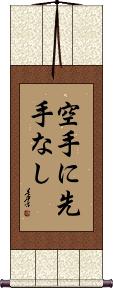
空手に先手なし means there is no first attack in Karate, or there is no first strike in Karate.
Note: Because this selection contains some special Japanese Hiragana characters, it should be written by a Japanese calligrapher.
Ni-Dan
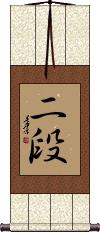
二段 is a Japanese Kanji word that literally means “second degree.”
二段 is the second black belt rank in Japanese martial arts.
The first Kanji means two or second in Japanese.
The second Kanji means step, grade, rank, or level.
二段 can also be written as 弐段. This version just uses a more complicated Kanji for the number two.
Hello / Ni Hao
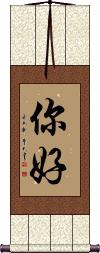
你好 is the day-to-day way to say hello in Chinese.
The characters literally mean, “You good?” It's the equivalent of “What's up?” in English, where nobody expects an actual answer.
This explanation is here for educational purposes only. 你好 is an oral word that is not appropriate for a scroll (not a bad meaning, just very odd for a wall scroll).
The following table may be helpful for those studying Chinese or Japanese...
| Title | Characters | Romaji (Romanized Japanese) | Various forms of Romanized Chinese | |
| Ni | 倪 | ní / ni2 / ni | ||
| Ni | ニ | ni | ||
| Karate Ni Sente Nashi | 空手に先手なし | karate ni sente nashi karatenisentenashi | ||
| Ni-Dan | 二段 | ni dan / nidan | ||
| Hello Ni Hao | 你好 | nǐ hǎo / ni3 hao3 / ni hao / nihao | ||




